 Skip to main content
A KitchenAid dishwasher not draining is usually fixable, but not always by hand. Persistent clogs, failed pumps, and valve faults need proper diagnosis and genuine parts. That’s where we come in. Dishwasher Repair provides same-day KitchenAid dishwasher repair across Toronto, handled by licensed technicians who arrive with parts on the truck. Whether you need a one-time dishwasher repair or ongoing appliance care, our team backs every KitchenAid dishwasher repair job with a service warranty. Call 647-559-6291 today and let a dishwasher repair expert get your kitchen flowing again.
- Phone: 647-559-6291
- 333 Bay St. , Toronto, ON M5H 2R2
- Every Day: 8:00 AM - 8:00 PM
KitchenAid Dishwasher Not Draining – What To Do?
- Dishwasher Repair
- July 12, 2026
- 04:30 PM
- no comments
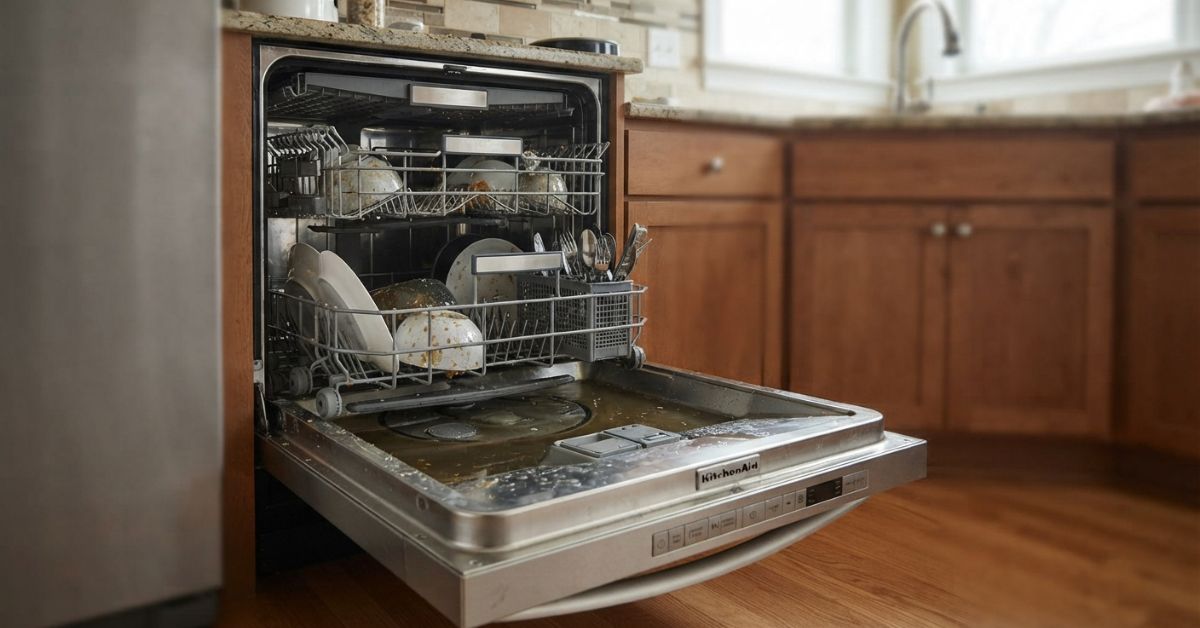
Standing water at the bottom of the tub is one of the most common complaints we hear from Toronto homeowners. In most cases, a KitchenAid dishwasher not draining comes down to a handful of predictable culprits: a clogged filter, a kinked hose, or a tired drain pump. Sometimes it’s a five-minute fix. Sometimes it isn’t. Below, we’ll walk through the likely causes first, then the repairs you can safely try at home before booking a Dishwasher Repair technician.
5 possible reasons your KitchenAid dishwasher won't drain
Before you grab any tools, it helps to know what you’re up against. Because drainage problems all share the same symptom, the actual cause can hide anywhere along the water’s exit path. In fact, most dishwasher repair calls we take start exactly this way.
Clogged Dishwasher Filter
Food scraps collect in the filter at the base of the tub. Eventually, water simply can’t pass through. This is the number one cause, and the easiest to rule out.
Blocked Drain Hose
The hose running from the pump to your sink drain can kink, sag, or clog with grease. Also, hoses pinched during installation tend to fail slowly, so the problem creeps up over months rather than overnight.
Faulty Drain Pump
When the pump motor burns out or the impeller jams on broken glass, the water stays put. You’ll often hear a hum with no draining. That hum matters.
Garbage Disposal Connection Is Blocked
If your unit drains through a disposal, a forgotten knockout plug or debris in the connection port will stop everything. However, this one is easy to miss after a new disposal install.
Drain Valve or Check Valve Malfunction
Some models use a valve that lets water out but never back in. As a result, a stuck valve either traps water in the tub or allows dirty water to flow back once the cycle ends.
How to Fix a KitchenAid Dishwasher That is Not Draining?
Now for the fixes. First, disconnect power at the breaker, because you’ll be working near the pump and wiring. Then work through these steps in order.
Clean the Dishwasher Filter
First, twist out the cylindrical filter on the tub floor and rinse it under warm water with a soft brush. Then, wipe out the sump area beneath it. For example, fruit seeds, jar labels, and glass shards love hiding there. Five minutes, honestly.
Inspect and Clear the Drain Hose
Next, pull the unit forward and check the hose for kinks. If it’s clogged, disconnect it at the sink end and flush it through. Additionally, confirm the hose loops up higher than the drain connection, since a low loop causes dirty water to flow backward.
Check the Drain Pump
Then, remove the lower spray arm and filter housing to reach the pump inlet, and clear any debris around the impeller. If the pump hums but won’t move water, it likely needs replacement. That’s a job for a KitchenAid dishwasher repair professional rather than a weekend project.
Reset the Dishwasher
Finally, some drainage faults are control-board hiccups. So, cut power for five minutes, restore it, and run a drain-only cycle. If your KitchenAid dishwasher still holds water after a reset, the fault is mechanical, not electronic.
